Basic Commands to Teach Your Dog
Make your dog a better citizen by teaching it a few simple but powerful commands.
Dogs are extraordinarily sensitive, intelligent creatures with an instinctive desire to please their humans -- but that doesn't mean automatically knowing what to do or how to do it. If you've struggled to keep your pet from jumping up onto strangers, rooting around in filthy places, or running wild during a walk, some simple dog training can help you get those behaviors under control. Let's look at some basic commands you can teach your dog.
Why Every Dog Needs Training
Dogs are like human children in one respect: They're not likely to behave correctly until someone teaches them how. But dog training isn't just about teaching your dog not to cause annoyance. Training can help socialize a dog that might otherwise be afraid of (or aggressive toward) strangers. It also helps you build a bond of communication and helps you keep your dog from getting into potentially dangerous situations.
The Basic Dog Commands Every Canine Should Know
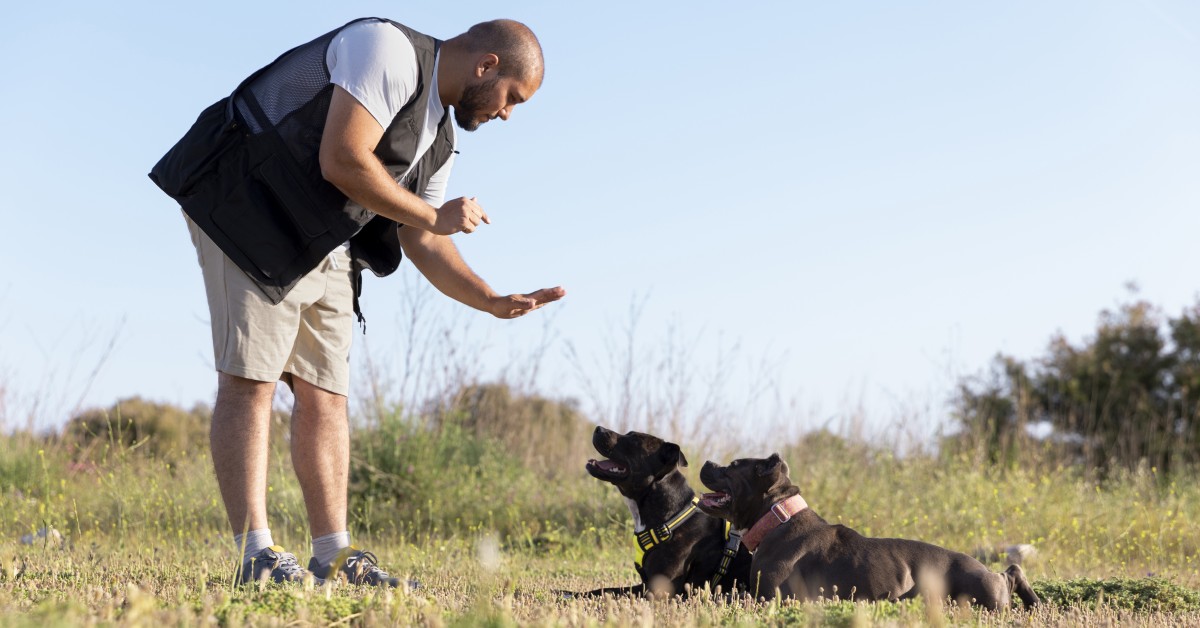
You may have seen trained dogs perform all kinds of miraculous tricks on TV or social media -- but all that really matters is that you teach your dog the fundamentals. As you'll see, rewarding your pet with treats can serve as a powerful training tool. (Never punish your dog for unwanted behavior, as punishment will only teach your pet to fear you.) Focus on training your furry friend to obey the following simple commands.
- Sit - The "Sit" command teaches your dog to wait calmly and patiently in one place, in a relaxed position. Raise a treat above your dog's head. The pooch's bottom will naturally lower to the ground as it raises its snout upward. As its bottom touches the ground, say "Sit" and then give your dog the treat. Repeat this exercise until your dog automatically sits on command.
- Stay - The "Stay" command is similar to "Sit" in immobilizing your dog, but it's a more general order that simply tells your dog to stay put, no matter what position it's currently in. Park your dog in a particular spot, say "Stay," then move slowly away from it. If your dog starts to follow you, patiently lead it back to its spot and try again. Every time it obeys the "Stay" command correctly, reward it with a treat.
- Down - This command will help you stop your dog from jumping up on strangers, furniture, or your nicest clothes. Teaching "Down" is a lot like teaching "Sit," except that you hold the treat down toward the ground. As your dog instinctively lowers its body in response, apply a gentle hand to its shoulders to encourage it to lie down while issuing the "Down" command. Then give your dog a treat to reward a job well done.
- Up - Sometimes you may need your dog to leap up into a vehicle or onto an elevated surface, in which case you'll be glad you taught it the "Up" command. Practice by getting up on the elevated surface yourself and waving a treat at your dog. Every time your dog jumps up onto the surface, give it the treat.
- Come - Practice the "Come" command by taking your dog out to a roomy, quiet space, keeping it on a long leash. Once your dog is a respectable distance from you, say, "Come" while offering a treat, handing the treat over when the dog comes all the way over to you. Once you're satisfied that your dog gets the basic idea, you can risk taking it off the leash and then issuing the "Come" command.
- Leave It - This command helps you steer your dog away from things it shouldn't be sniffing at, eating, or generally fooling around with. Place a treat on the ground, but then put a hand in the way to keep your dog from getting it while saying, "Leave it." Once your dog learns to leave the treat alone without you needing to block its path, give it the treat.
- No - Sometimes you just don't want your dog to do a particular thing, even if you haven't worked with your dog to avoid that specific behavior or action. This is where "No" can come to the rescue as an all-purpose command. To teach your dog "No," issue the command with an authoritative, serious tone while interrupting whatever action your dog needs to stop doing. Over time, your dog will learn that the sound of "No" means, "Stop that."
Having Trouble Training Your Dog? Your Vet May Be Able to Help
What should you do if your dog fails to learn or obey basic commands? If you've worked tirelessly at training your dog but can't seem to get anywhere, the problem may lie, not with your training techniques, but with an underlying medical condition that's getting in the way. For instance, an undiagnosed vision or hearing problem might make it impossible for your pet to recognize the commands or cues, while a chronic pain condition might limit your dog's ability to perform certain actions. Anxiety disorders can also contribute to behavioral challenges.
If you can't identify the cause of your dog's training issues, schedule a veterinary exam to look for any medical problems that might require treatment. You may end up with a dog that's not only more obedient, but also healthier and happier!
Ready to start saving money on pet wellness care?
Then take a look at Mint Wellness, the pet wellness plan that provides fast reimbursement on routine pet care. Save on vaccinations, wellness exams, preventatives, dental, and more!
Learn More